
Prev
Click the blue text and follow us
✦
JUMBO SHEEN
INVESTMENT
✦
Updates on Invested Projects
Warm congratulations to Orienspace, an investee company of JUMBO SHEEN Fund, on the successful open-sea launch mission of Gravity-1!
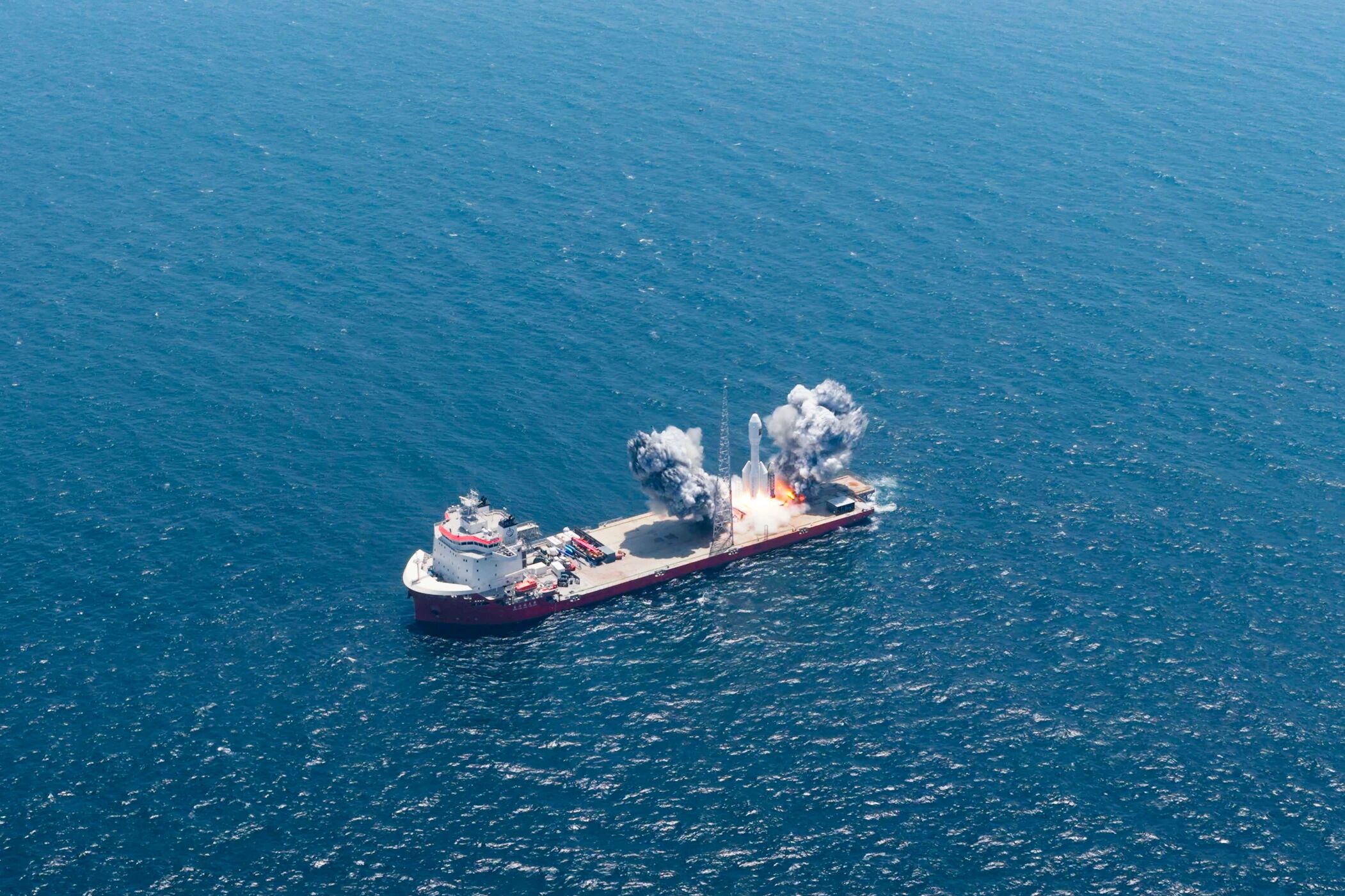
At 10:54 on July 22, 2026, the Orienspace Gravity-1 (Yao-4) · Star Constellation Carrier Rocket, assembled and rolled out from the Oriental Spaceport in Haiyang, Yantai, ignited and lifted off over the East China Sea. It delivered nine onboard satellites into preset orbits and conducted one payload experiment concurrently, marking a complete mission success.
This represents the first open-sea launch mission undertaken by Orienspace and the Gravity-1 rocket. It is also China’s first maritime launch of a privately-owned commercial rocket conducted in the East China Sea off the Yangtze River Delta.
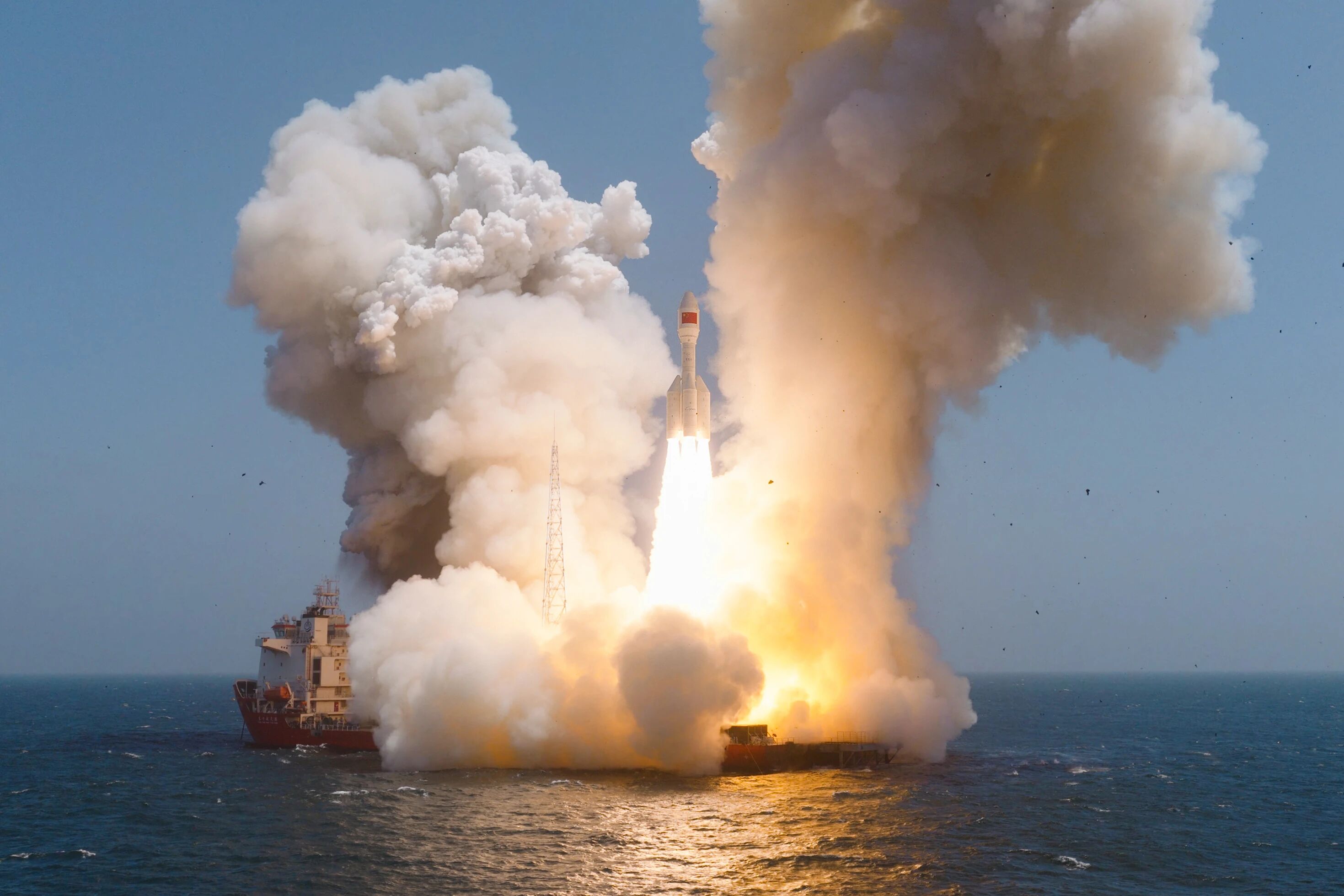
As the solid-propellant launch vehicle with the world’s largest payload capacity in operation to date, Gravity-1 has conducted three sea-launch missions so far. Multiple real-flight campaigns have verified the system compatibility and reliability of the full rocket stack. This mission further validates the adaptability of Gravity-1’s solid strap-on configuration to complex sea conditions and its capability to maintain readiness for extended durations, proving that the sea launch system is mature, stable and dependable.
The mobile offshore launch platform is not restricted to fixed sea zones or weather conditions. It can flexibly select optimal launch windows to avoid adverse sea states and meteorological impacts. Such a flexible and mobile launch model can substantially boost launch efficiency, ease mission pressure on land-based launch sites, cater to diverse commercial launch requirements, and support the diversified layout of China’s space launch infrastructure.
Notably, the mass of satellites delivered to orbit in this mission sets new records for orbital mass and mission value among China’s private commercial space application launches. The Dongpo-13, Dongpo-14 and Dongpo-17 to 20 satellites launched in this mission boast prominent strengths in lightweight design, high mobility and rapid responsiveness, alongside outstanding imaging performance. They are capable of large-scale Earth observation around the clock and in all weather conditions. Xiguang-2 No.01 Satellite and Spacety-49 Satellite are built around the integration of “Artificial Intelligence + Commercial Aerospace + Quantitative Remote Sensing”, delivering observation services for industrial clients covering mineral resources, agriculture and forestry, environmental monitoring, urban planning and other sectors. The Lilac-3 Satellite carries out technical experiments on an ultra-flat integrated thermal-structural platform and innovative attitude control technologies. The Neptune test payload adopts a modular design, enabling flexible compatibility with flexible solar wings of various specifications.
【Gravity-1 is a medium-lift launch vehicle independently developed by Orienspace. It features a low Earth orbit (LEO) payload capacity of 6.5 tonnes and a 500 km sun-synchronous orbit (SSO) payload capacity of 4.2 tonnes. Capable of launching up to 30 hundred-kilogram-class satellites in a single mission, it addresses multi-satellite launch requirements for various small spacecraft and drastically improves constellation deployment efficiency per launch.
Gravity-1 notched multiple milestones on its maiden flight in January 2024, including the world’s largest solid-propellant launch vehicle and China’s highest-payload private commercial launch vehicle. The rocket has now officially entered a phase of commercialized and large-scale operations with reliable delivery capability, accelerating the construction of China’s satellite internet constellations.】
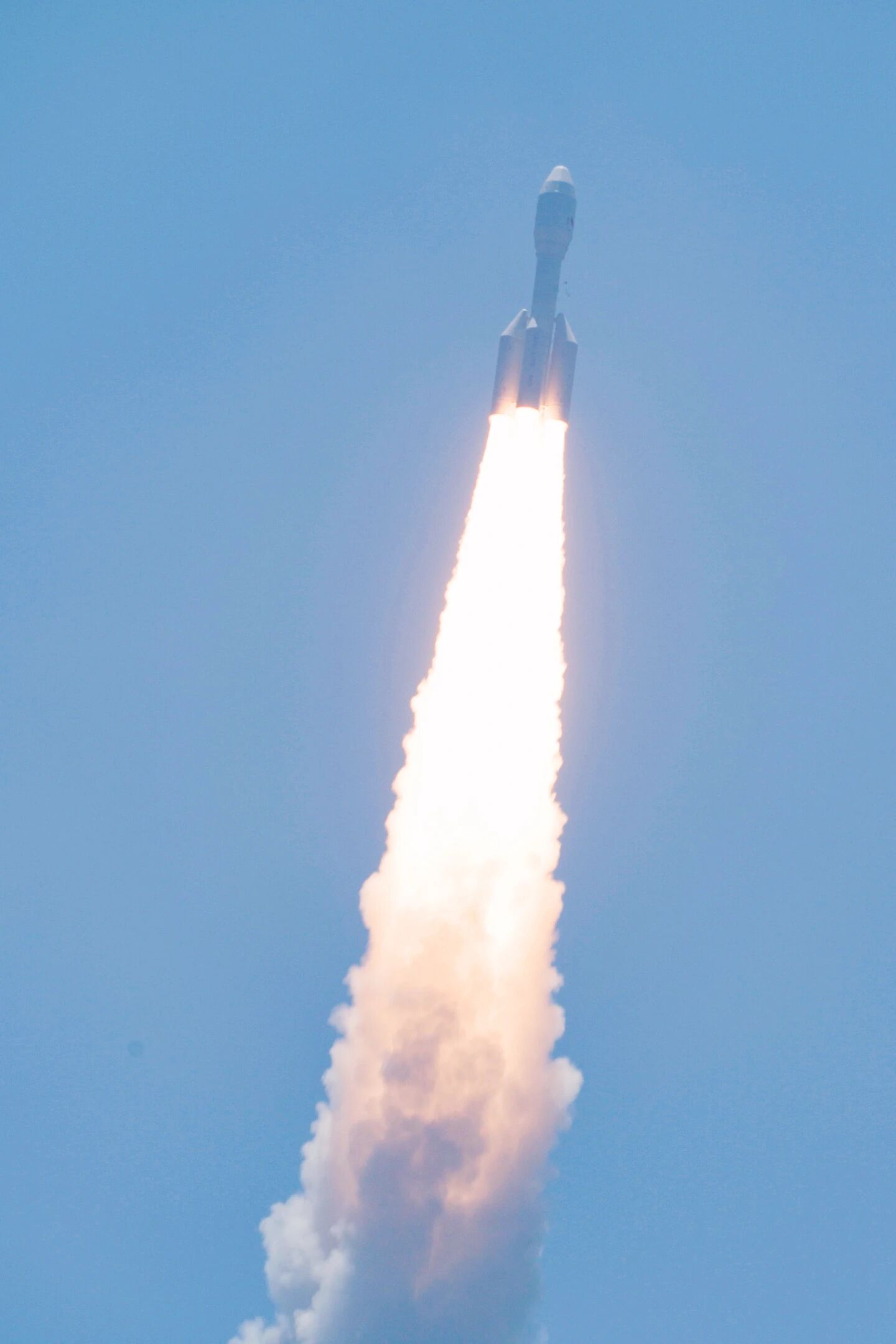
Gravity-1 will further drive down per-unit orbital insertion costs through mass production and regular launches, enabling efficient execution of large-scale constellation deployment missions. Its rideshare “multiple satellites per launch” model lowers orbital access costs and market entry barriers for commercial satellites. Meanwhile, Gravity-2, a reusable medium-to-large liquid-fuel launch vehicle, is under accelerated development and nearing completion, with a LEO payload capacity of 21.5 tonnes. The two vehicle models complement each other to build accessible, practical capabilities for space access and provide industrial support for the large-scale development and utilization of low-orbit space resources.
Moving forward, Orienspace will continuously optimize product performance and cut launch costs to consolidate its core strengths in high-payload, large-scale constellation launch services. The company will also speed up launch vehicle technology iteration, improve its product portfolio and enhance commercial launch service capacity to precisely meet diverse commercial aerospace demands such as constellation deployment. This will help advance high-quality development of China’s commercial aerospace industry.

Jumbo Sheen Fund
Disclaimer:The content involved in this article is for sharing and exchange purposes only, and shall not be construed as investment advice. It is provided merely for readers' reference. All copyrights of the quoted content belong to the original authors. If any infringement is found, please contact us for removal.